
The card is the job
Three hours of play, a card full of bursts, and someone who wants the set before they leave the lot. Sports editing is not a mood board. It is volume, mixed light, and a clock.
Most nights fail in the same place: you start polishing before the set exists. You second-guess every near-duplicate. Stadium lights fight the white balance. Sharpening turns jerseys into plastic. The gallery goes out late, or it goes out looking like three different photographers shot it.
What follows is nine habits. They are the same problems every sports shooter already knows. The Daydreamers version is honest about the product: suggestions on the pile, your pick, originals untouched, a gallery you can send tonight. Finish work still belongs in the editor you already trust.
1. Cull the burst. Keep the story.
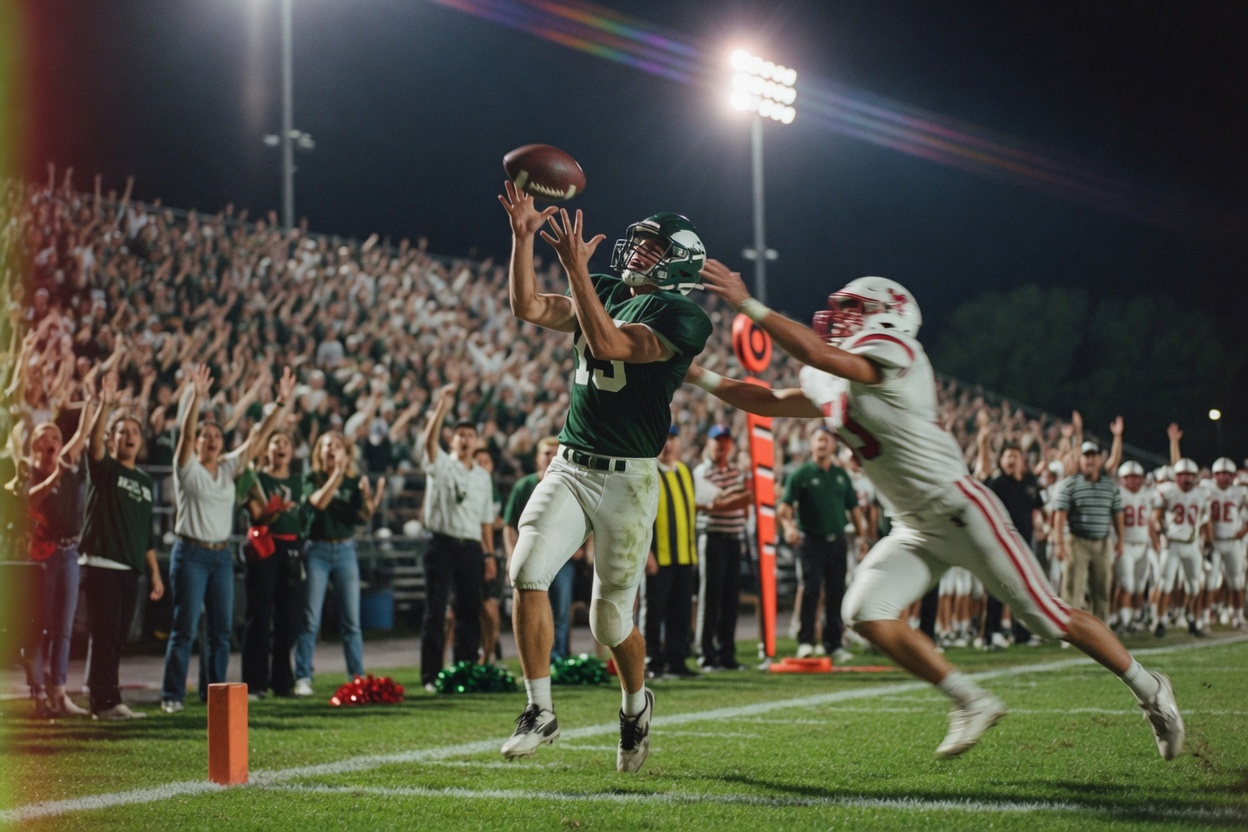
Burst mode is how you catch the catch. It is also how you end up with sixty frames of the same reach. The 5% that matter are usually obvious once you stop treating every frame as a candidate: ball contact, the top of a jump, the face that changes, the step where the play turns.
Walk a sequence in order. The reach, the catch, the defender’s face, the start of the celebration — those are four photographs, not forty. Near-duplicates do not all deserve a develop pass.
Daydreamers Smart Cull can flag blur, blinks, and burst duds. It does not auto-delete. Rejects are flags. Originals stay on the card and on disk. You still mark the keepers. That is the point: shrink the pile without giving the night away to a model.
2. Straighten first. Crop for the play.
A tilted horizon reads as haste, not style. Level the frame before you invent a crop. Then decide whether the story is the face, the full body, or the field around them.
Leave room in the direction of travel so the athlete moves into the frame. Do not crop through joints unless you mean it. Hands and feet usually belong in the picture. Background stays when it is part of the play — a packed stand, an empty end zone, a scoreboard that actually matters.
Close crops on a grip or a ball, a tall crop for a jumper, a wide crop for the whole collision: those are choices, not defaults. If the client needs a story crop and a square, decide that on the pick, not on the second export.
3. Keep the freeze. Keep the blur.
Sports need a sharp subject and, often, a streak of motion. Global crunch kills both. Over-sharpening makes the athlete look cut out. Under-editing leaves the whole frame mush.
Sharpen the person. Let the background stay a little softer so the play has depth. If the panning blur is the photograph, do not “fix” it. Motion is information.
Do the local work in the editor you finish in. Daydreamers is not a replacement for Lightroom or Photoshop masks. It is the pass that decides which frames are worth that work.
4. Treat the lights as one problem, not a thousand.
Noon sun, cheap gym LEDs, mixed stadium floods, a pocket of shade on the sideline — sports white balance is chaos. Correct it before you grade. A gallery that shifts color every ten frames looks unauthored.
Set a custom white balance in camera when you can. Batch the sequences that share a lighting setup: under the roof, on the far sideline, after the lights came on. Do not correct every frame as if it were a different night.
If a look you already use holds across a gym, save it and apply it as a starting point. Confirm the color on a real file from that venue before you trust it on the whole card.
5. Sharpen the athlete, not the noise.
Uniforms are texture. Faces need the detail. High ISO already brought the grain. Global sharpening just makes the grain louder.
Put the bite on the subject — jersey, ball, expression — and leave the stands alone. Texture on fabric is usually enough. A high-pass or a tight mask in Photoshop is still the controlled way if you need more.
The mistake is plastic skin and crunchy backgrounds. If it looks like a video-game render, you went too far.
6. Grade for the night you were actually at.
RAW sports files often come back cold: LED gyms, green bounce off the turf, skin that looks gray. Color is how you say whether this was a late-afternoon field or a hard indoor court. Warmth can add intensity. It can also lie.
Lift vibrance carefully. Watch the reds in the jerseys. Match the brief: a recap gallery is not a campaign, and a campaign is not yours to reinvent if the client already has a palette.
Fifty frames or five hundred, they should feel like one photographer. Start from one look, then correct the exceptions. Daydreamers can remember a look you save for your own work. It is not used to train a shared model for other photographers.
7. One pass for the pile. One pass for the pictures.
Do not try to cull, grade, crop, and retouch in a single scroll. Sports volume punishes that. A first pass throws out the disasters. A second pass is the keepers. A third pass is the client set and the export.
Suggestions help on the first pass — focus, blinks, near-duplicates. They do not choose the story. If two frames are both sharp, you still decide which face is the photograph.
When the set exists, take it to the editor you already finish in. Matching sliders is not matching pixels. Check a file from this venue before you batch the rest.
8. Quiet the background. Don’t invent a new stadium.
Banners, foam fingers, officials, a photographer in the end zone — venues are clutter. The background should support the athlete, not compete.
A little blur, a darker stand, less saturation behind the subject: those are usually enough. Remove the thing that actually ruins the frame. Do not rebuild the stadium.
If you take a distraction out, look at the edges. A clean miss is better than a melted patch of turf. Originals stay untouched either way, so you can put it back.
9. Organize like you have to find this game in six months.
Folders by game, team, or half. Names you will understand in March. Ratings on the pick, not after you have already developed three hundred files. Separate the lighting setups so a batch does not “fix” the night game with the afternoon white balance.
Export from a set you already chose. Story crop, square, full-res — decide once. The gallery is a copy you publish. The masters stay with you.
Same-night delivery is an order of work, not a slogan: import, pick, prepare, send. If the night runs long, publish what you have and follow up. Do not wait on a feature that is not in the path.
What you can control
You cannot make the quarterback throw a spiral or make the gym lights behave. You can decide which frames are the night, hold the motion that belongs, and send a set that still looks like you.
Daydreamers is built for that order: import a shoot, pick the keepers, send a gallery. Originals stay local. Smart Cull suggests. You keep the last word. Adobe stays available when you want it.
Questions that come up on a sports card
Do sports photographers edit? Yes. The lights are rarely kind, the volume is real, and a client set has to hold together. Editing here is correction and selection, not inventing a play that did not happen.
JPEG or RAW? RAW when you can. Mixed light and high contrast are the whole job. The extra size is cheaper than a file you cannot recover.
Camera starting points, not rules: shoot RAW, shutter fast enough for the sport (often 1/500s or quicker unless you are panning on purpose), ISO as low as the lights allow, aperture wide enough to separate the subject without losing the catch.
What usually ruins the set? Over-sharpening, and a white balance that changes every burst. Preserve the motion you meant. Make the color one photographer’s.
Talk back
Like it, hate it, or tell us what to build. Notes are stored with this Daydreamers site so the product can actually change.