
The interval, not the slider
The biggest sports-photography problem is not editing by itself. It is everything between pressing the shutter and getting the correct photograph in front of the correct person.
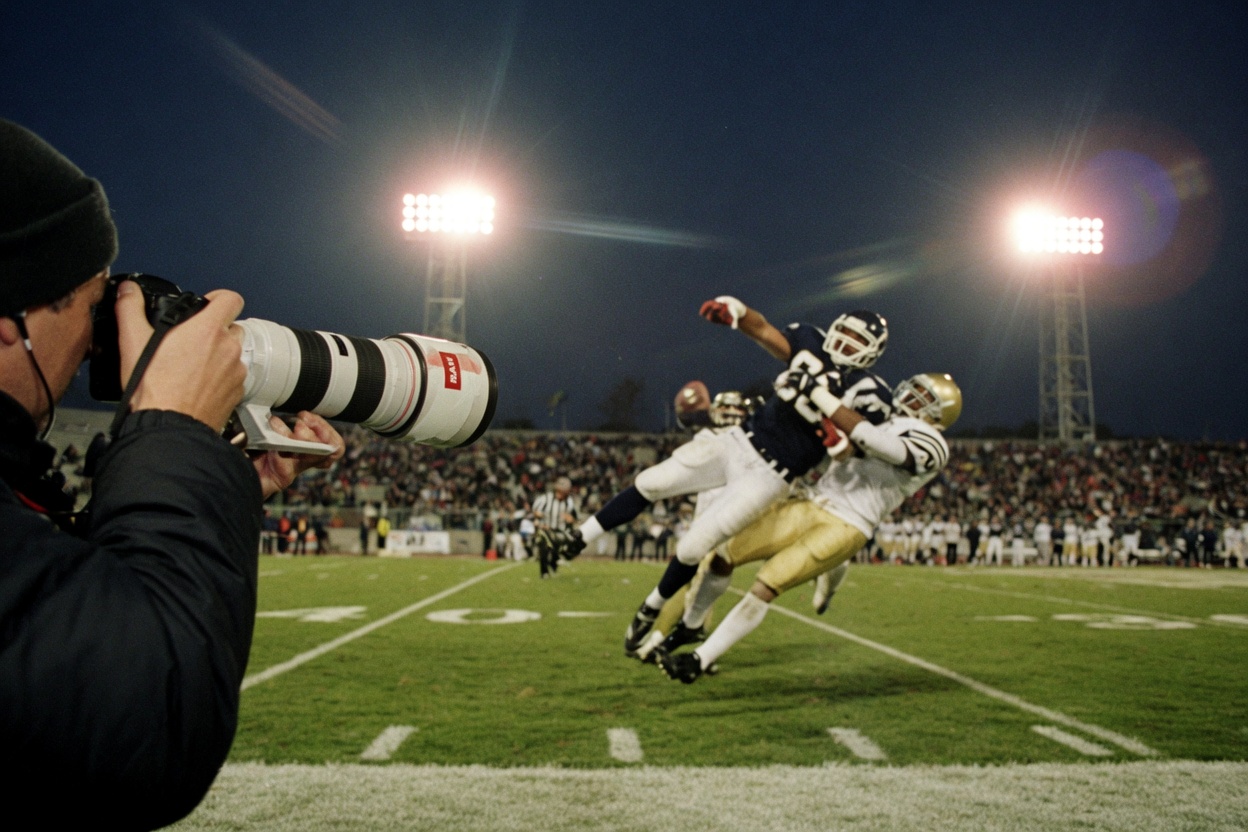
A sports photographer can shoot 3,000 to 9,000 frames in one game, often in long bursts where only one or two frames hold the peak. A club, a wire desk, a social manager, an athlete, a parent, or a buyer may want those frames during the match, at half-time, and right after the whistle. Photographers on public forums describe 6,000–8,000 RAW files from a football match while the club is already asking for pictures.
If the genie wish is one sentence: I want to press the shutter, and I want the right photos identified, edited like me, labeled with the right athlete and event, backed up, delivered to the right person, and sold or published within minutes — without sitting at a computer.
That is bigger than an AI culling product. It is bigger than a slightly better Aftershoot. The rest of this note is the wish list underneath that sentence. Daydreamers is building toward it. We do not pretend the genie is shipped. Leave a comment at the bottom — what you like, what you hate, what to build next.
1. Ready the second I shoot
The luxury workflow is shoot, go home, import, cull, edit, export, upload. Professional sports often looks like: shoot, transmit, an editor sees it in seconds, crop and caption, publish. Camera Bits has described Associated Press sports desks where frames arrive from the sideline within seconds and move through identify, tone, metadata, and the wire.
Speed is money. One race photographer reported more than ten hours to get 5,000+ photos online while a competitor put up about 8,000 in under an hour, and estimated the delay cost most of the sales. That is one person’s night, not a lab study. It is still the market.
Genie: everything I shoot is already online before I pack the camera. Daydreamers today: pick, then send a gallery the same night. The camera-to-desk live path is the larger build.
2. Find THE frame. Don’t make me inspect 8,000.
Culling is keep or reject. Sports bursts are not duplicates. They are different milliseconds: approaching, foot down, both feet off, better face, eyes closing, defender in the way. Aftershoot’s sports notes talk about 3,000–5,000-frame jobs where only dozens of moments matter, and about grouping bursts, focus, expressions, peak action.
Photographers still say current AI cull is built for portraits and weddings. A Lightroom user shooting running events wanted the frame where both of the runner’s feet are off the ground — and still walked the burst by hand. That is the product insight. Sharp versus blurry is table stakes. The wish is: which frame is the sports moment I would pick?
- Ball on bat, ball leaving the fingertips, dunk at the peak, catch, keeper contacting the ball
- Runner airborne, swimmer breaking water, collision, celebration, reaction, win or loss
- Clean background, unobstructed face, eyes visible, the important player, the important play
3. Tell me WHO is in every photo
Once you sell to individual athletes, identity is the product. A marathon is 4,000 runners and 80,000 pictures. The buyer does not want Gallery → 80,000 photographs → scroll. They want Melani Shrestha → 47 photos of Melani.
Motorsports photographers describe customers who cannot find themselves in 1,000+ frames, and the extra job of tagging by hand. PhotoDay sells FaceFind for high-volume sports. Photo Mechanic lets you type jersey shorthand and expand it into name, team, position. Demand is already paid for.
The large version combines face, jersey, bib, OCR, roster, kit colour, event timing, camera position. Then #23 is Jane Doe, USC, women’s soccer, 34th minute, without you typing it.
Genie: every photo already knows who is in it. Daydreamers today: a shoot roster, jersey/bib tags in Studio, Find my photos on the gallery. Faces are counted for cull. Faces are not named. That next layer stays local — not a shared face model trained on other photographers’ work.
4. Make 4,000 photos look like I edited them
Stadium light is not a preset. Sun, cloud, shade, LED arenas, two bodies, two lenses, ISO walking, white balance drifting. Aftershoot’s own sports-editing notes call out mixed light, colour casts, batch consistency, and sharpening.
The wish is not “apply one look to 4,000 files.” It is: make 4,000 different files converge on my style. One needs +0.7. One is fine. One needs white balance. One a tighter crop. One lifted shadows. One a levelled horizon. The gallery still has to feel like one photographer.
Genie: learn how I edit so I never batch-edit again. Daydreamers today: a look you save stays with your work. It is not a shared model. Per-frame style is the harder engine.
5. Stop making me move files
Camera → card → reader → SSD → Photo Mechanic → Lightroom → Photoshop → export folder → cloud → gallery → social → client. Every hop is latency. Photographers describe editing off the SD card during football because Instagram wants pictures during the match. Others report ~40 minutes to export 2,500 JPEGs from Lightroom on a fast laptop.
Genie: the photograph is never imported, exported, or uploaded. Camera → system. Everything after that reads the same asset. Daydreamers today: originals stay on your machine; a gallery is a copy you chose to send. The live ingest path is not “we already ate the card.”
6. Give every athlete their own gallery
One tournament, 40 teams, 600 athletes, 30,000 usable frames. You should not sit and manufacture Team A, Team B, Player A, Player B by hand. Teams often want everything. Players want photographs that contain them.
Genie: Event → USC → #12, generated without you filing. Identification feeds this. Without who-is-in-the-photo, automatic collections are fiction.
7. Sell my photos for me
High-volume sports turns the photographer into salesperson, store, marketer, gallery admin, support, and fulfillment. Motorsport photographers argue in public about charging the organiser, shooting free and selling, charging athletes, or mixing models — and whether the money covers the work.
The genie notices: John opened his gallery four times, favourited eight, bought nothing — and sends a real offer, not a fake countdown. Emma bought five singles; the complete set is one click more. Pricing, bundles, prints, team packages, sponsor sets.
Genie: turn every frame into the most revenue without making me run a shop. Daydreamers today: Stripe books for invoices and collected payments. A print lab and an in-gallery store are not this path yet. We will not invent one in copy.
8. Never lose a photograph
Thousands of files, fast ingest, easy to format the wrong card. Camera Bits describes event ingest that copies to editors and to backup as soon as the card is in. The photographer should not have to ask whether the card copied, the folder uploaded, or the checksum passed.
Genie: losing a photograph is practically impossible — local copy, second copy, integrity check, optional cloud, card verify. Daydreamers today: originals stay local; a published gallery is not a backup of the shoot. That sentence stays true.
9. Caption and tag everything
Editorial work wants photographer, copyright, event, place, team, player, caption, keywords — IPTC so the fields travel with the file. Photo Mechanic’s sports workflow exists because typing that by hand is slow. Code replacements turn shorthand into a full name and team.
Genie: look at the picture and write “Jane Doe (23) of USC celebrates after scoring against UCLA in the second half.” Daydreamers today: roster plus jersey/bib shorthand on the frame, the same habit as code replacement. Automatic captions from the pixels are the next writer, not a silent lie in the sidecar.
10. Google Search for every photograph I’ve ever taken
Fifteen-year archives are where strong sports frames go to hide. The wish is not another folder tree. It is: show me every photograph of #23 scoring against UCLA with her face visible and a defender in frame. Best verticals with empty sky for a magazine slug. Night celebrations, red kits.
Genie: search a career the way you search the web. No keywords as a second job. That archive only works if identity, moment, and style were understood when the shutter fired.
What we would actually build
Not “AI photo culling.” Not “Aftershoot, but ours.” Camera → money / publication. You shoot. The system watches.
Ingest. Understand the sport and the play. Cull the burst for the moment, not the blur. Edit like you. Identify the athlete. Organize team and player sets. Describe the file. Deliver to the desk, the athlete, the parent. Sell. Archive so you can find it in ten years.
Existing tools already attack pieces of this — cull, edit, metadata, galleries, athlete search. That is evidence the pains are real. The opening is the seams between them.
Daydreamers’ wedge is photography, local originals, the photographer’s last word. Sports-semantic culling + who-is-in-the-photo + same-night delivery is the stack we will not fake. Tell us, below, which wish is loudest on your card.
- Turnaround — get it out immediately
- Sports-specific culling — the peak-action frame
- Athlete identification — who is in every image
- One workflow — stop transferring files
- Edit like me — per frame, one gallery
- Automatic collections — team and player sets
- Sell — consumer sports money while you shoot
- Never lose a file — ingest and backup
- Captions — IPTC without the typing
- Archive search — the whole career, like Google
Talk back
Like it, hate it, or tell us what to build. Notes are stored with this Daydreamers site so the product can actually change.
Which pain is loudest on your card?